Environmental Conservation Activities
Aiming for Carbon Neutrality
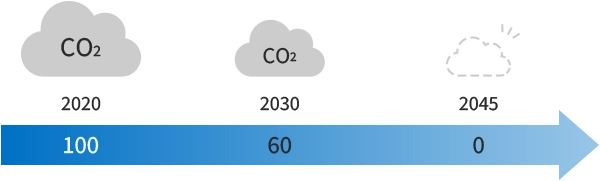
SMK has set medium- to long-term targets for Scope 1 and 2 emissions, aiming to achieve carbon neutrality by FY2045.
| Medium-term Target | Long-term Target |
|---|---|
| FY2030: Reduce CO2 total emissions by 40% from FY2020 | FY2045: Achieve carbon neutrality |
In addition, in line with the Electrical and Electronics Industry’s Carbon Neutrality Action Plan, we are working to improve energy
efficiency in manufacturing processes, targeting an average annual improvement of 1% or more in energy consumption per unit of
production value.
Regarding Scope 3 emissions, we are expanding the collection of primary data and will strengthen collaboration with suppliers to promote reduction initiatives.
Key initiatives
-
Upgrade to energy-saving facilities
-
Consideration of the expansion of renewable energy
-
Consideration of purchasing certificates or carbon credits
Progress in FY2025
CO2 emissions reduced by 53% from FY2020.
On track to achieve the medium-term target.
FY2025 Environmental Conservation Activities
| Activities | FY2025 | Self Assessment | |
|---|---|---|---|
| Target | Achievement | ||
| Preventing Global Warming | Energy consumptions: 1.7% reduction compared to the previous fiscal year. |
Energy consumptions: 1.4% reduction compared to the previous fiscal year. |
B |
| Energy consumptions per unit of production value*1: Same level as the previous year. |
Energy consumptions per unit of production value*1: 5.6% reduction compared to the previous fiscal year. |
A | |
| CO2emissons: 3.3% reduction compared to the previous fiscal year. |
CO2emissions: 4.8% reduction compared to the previous fiscal year. |
A | |
| Biodiversity Conservation | Spreading awareness of biodiversity conservation | A learning program on environmental conservation, including the importance of ecosystem preservation, was held for local elementary school students. | A |
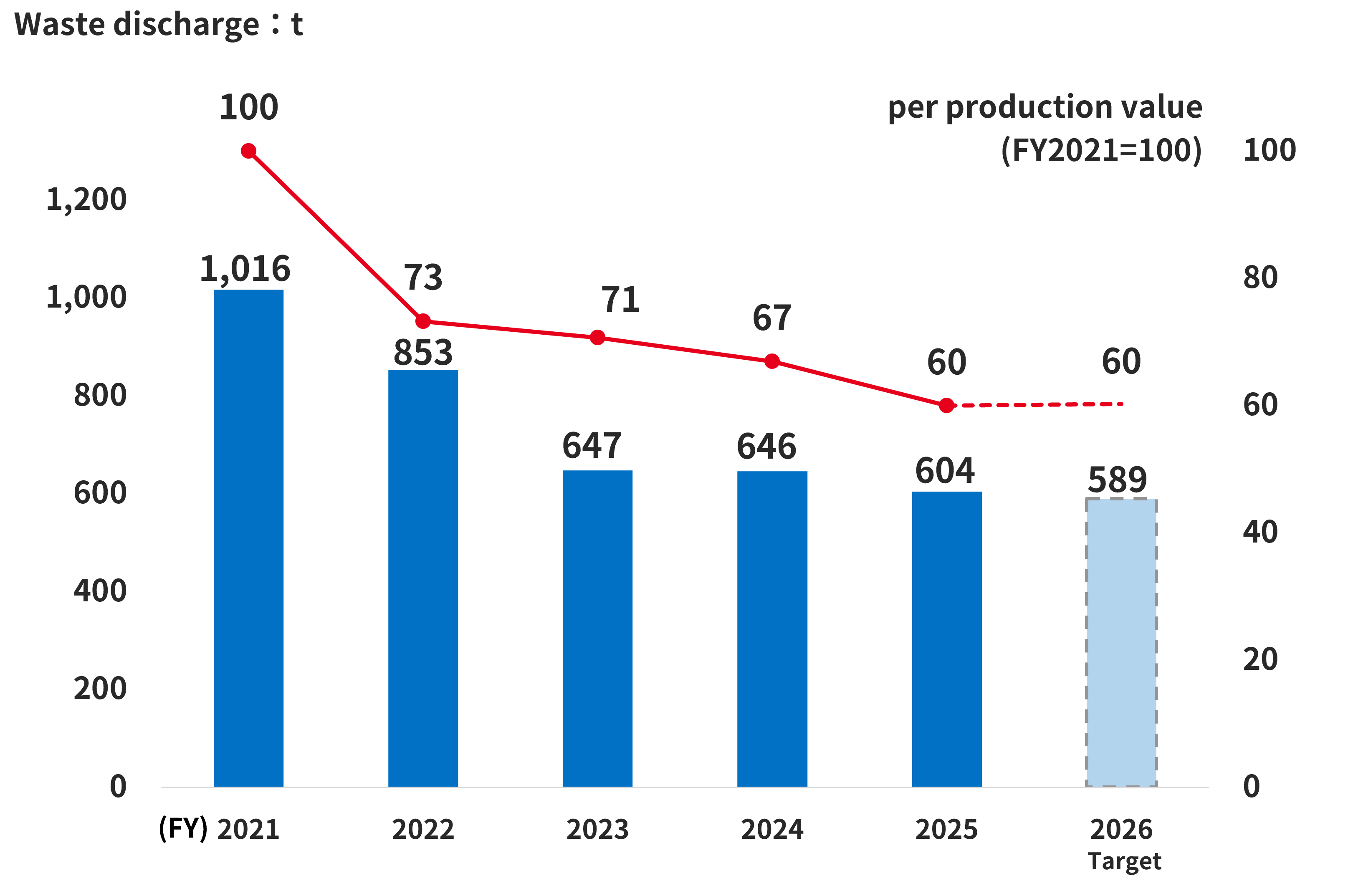
| Effective Use of Resources | Waste discharge: 6.5% reduction compared to the previous fiscal year. |
Waste discharge: 6.5% reduction compared to the previous fiscal year. |
A |
| Waste discharge per unit of production value*2: Same level as the previous year. |
Waste discharge per unit of production value*2: 10.4% reduction compared to the previous fiscal year. |
A | |
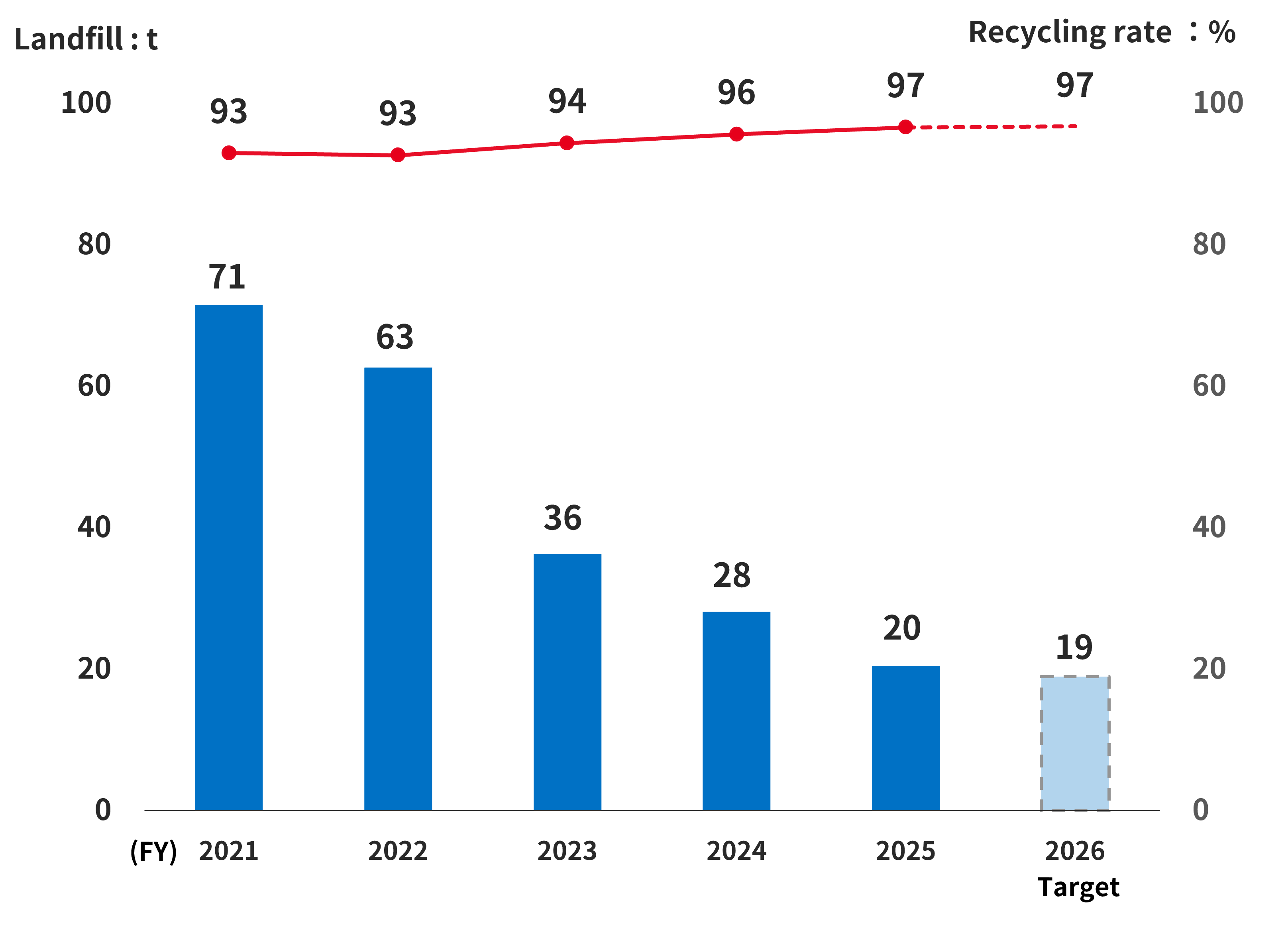
| Landfill disposal: Same level as the previous year. |
Landfill disposal: 26.9% reduction compared to the previous fiscal year. |
A | |
| Ensuring Environment-related Substance Management | Component Composition Information Registration and EU-REACH Compliance Efficient System Operation | Regularly upgrade management systems to promote efficient operations | A |
-
*
Self assessment
A: Target achieved
B: Target not achieved (improved on the previous year)
C: Target not achieved
-
*1
Energy consumtions divided by production value
-
*2
Waste discharge divided by production value
Energy and Resource Saving Results
Preventing global warming is considered an important management issue, and efforts are being made to improve energy efficiency.
Additionally, initiatives are in place to reduce waste discharge and achieve zero emissions (zero landfill waste disposal), aiming for the effective use of resources.
Energy Saving Results
Energy consumptions
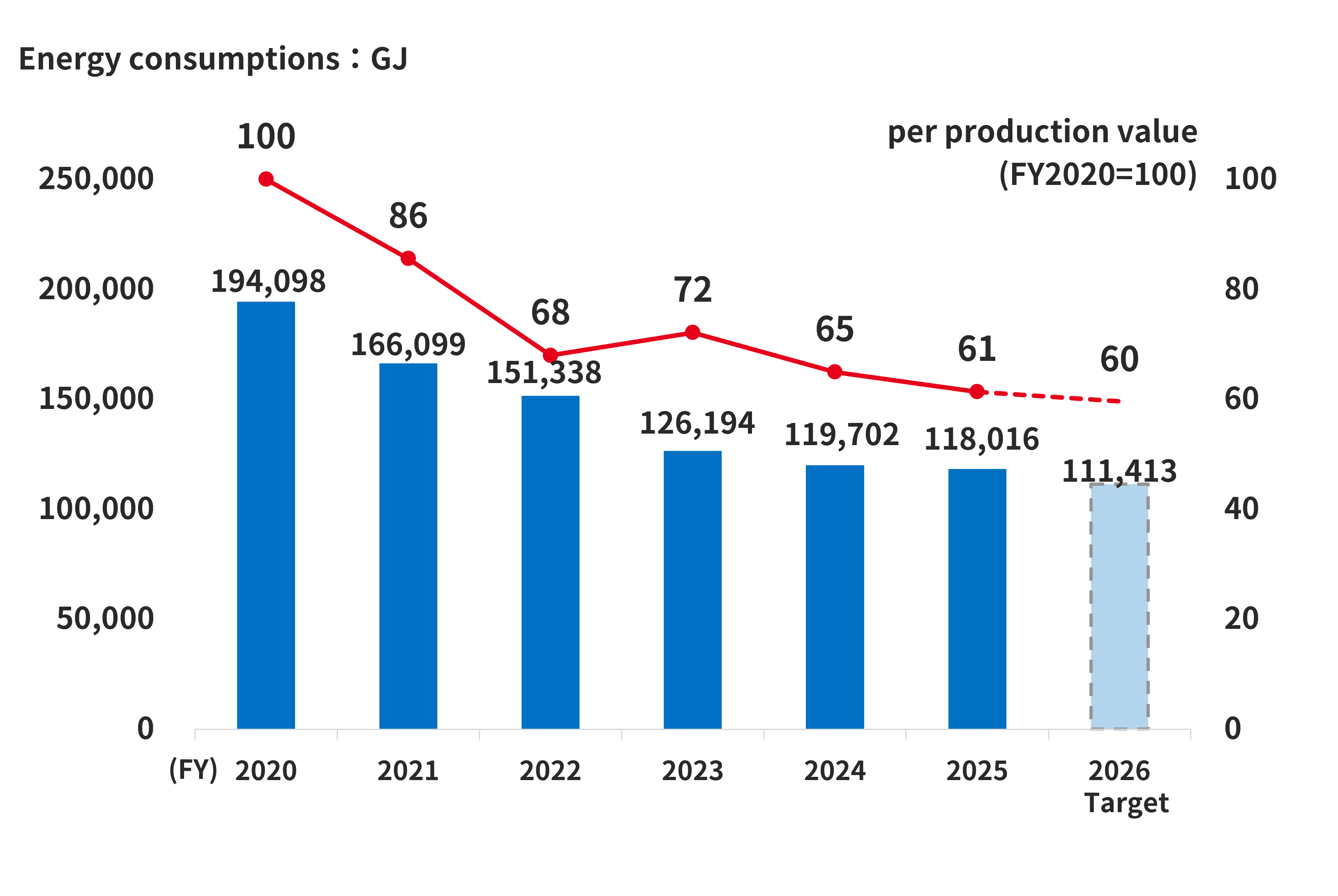
- Unit calorific value (fuel) conversion factor:
- Factors based on the Ministry of the Environment's "Greenhouse Gas Emissions Calculation, Reporting, and Publication System" are used.
CO2 emissions
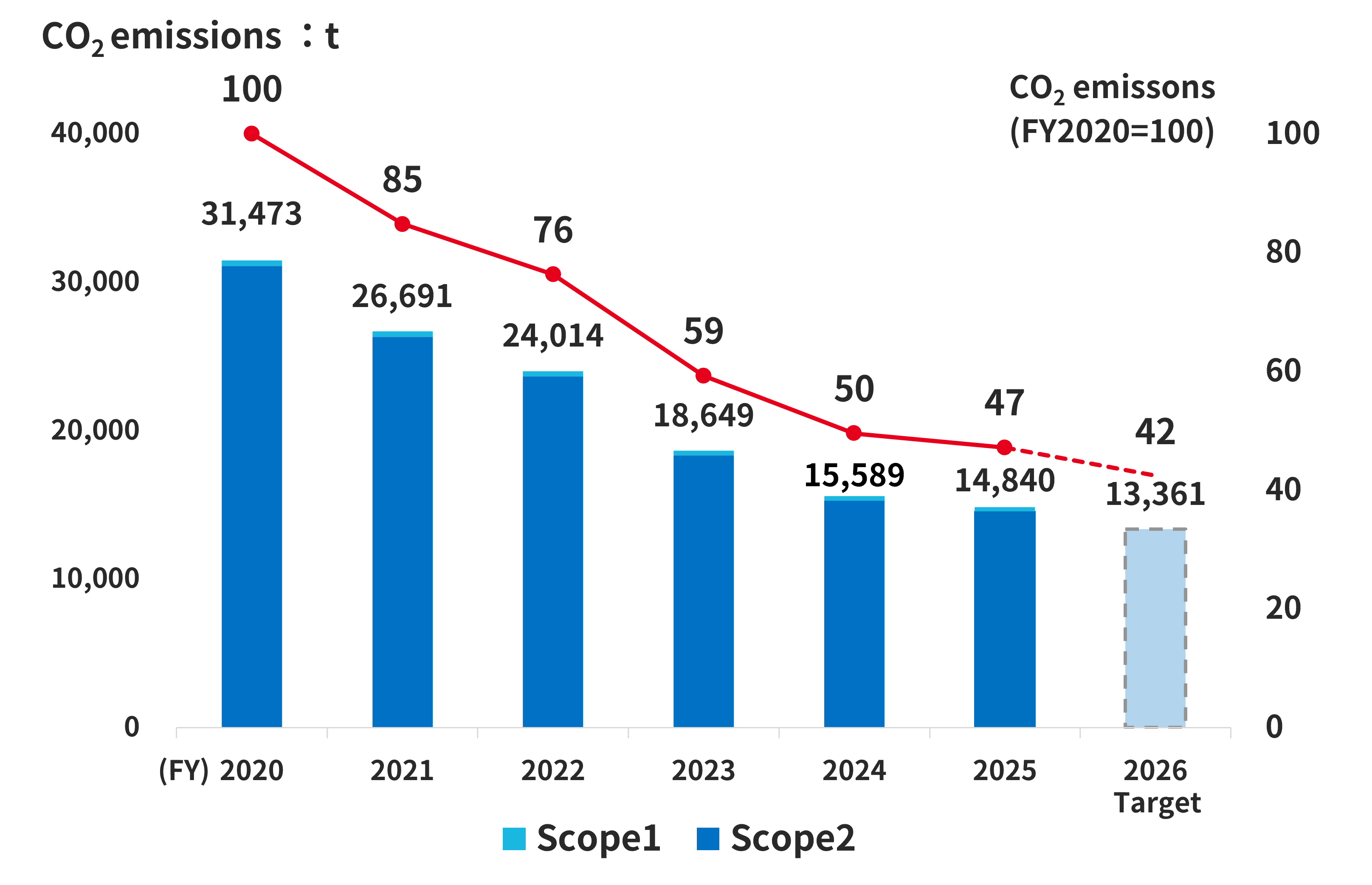
- CO2 emission factor:
-
-
Purchased electricity (Japan) : Factor published by the Electric Power Council for a Low Carbon Society,ELCS are used.
-
Purchased electricity (Overseas): Factors from IEA Emisson Factor 2021 are used.
-
Fuel: Factors based on the Ministry of the Environment's "Greenhouse Gas Emissions Calculation, Reporting, and Publication System" are used.
-
Past results have been revised due to the update of CO2 emission factors.
-
Use of renewable energy:
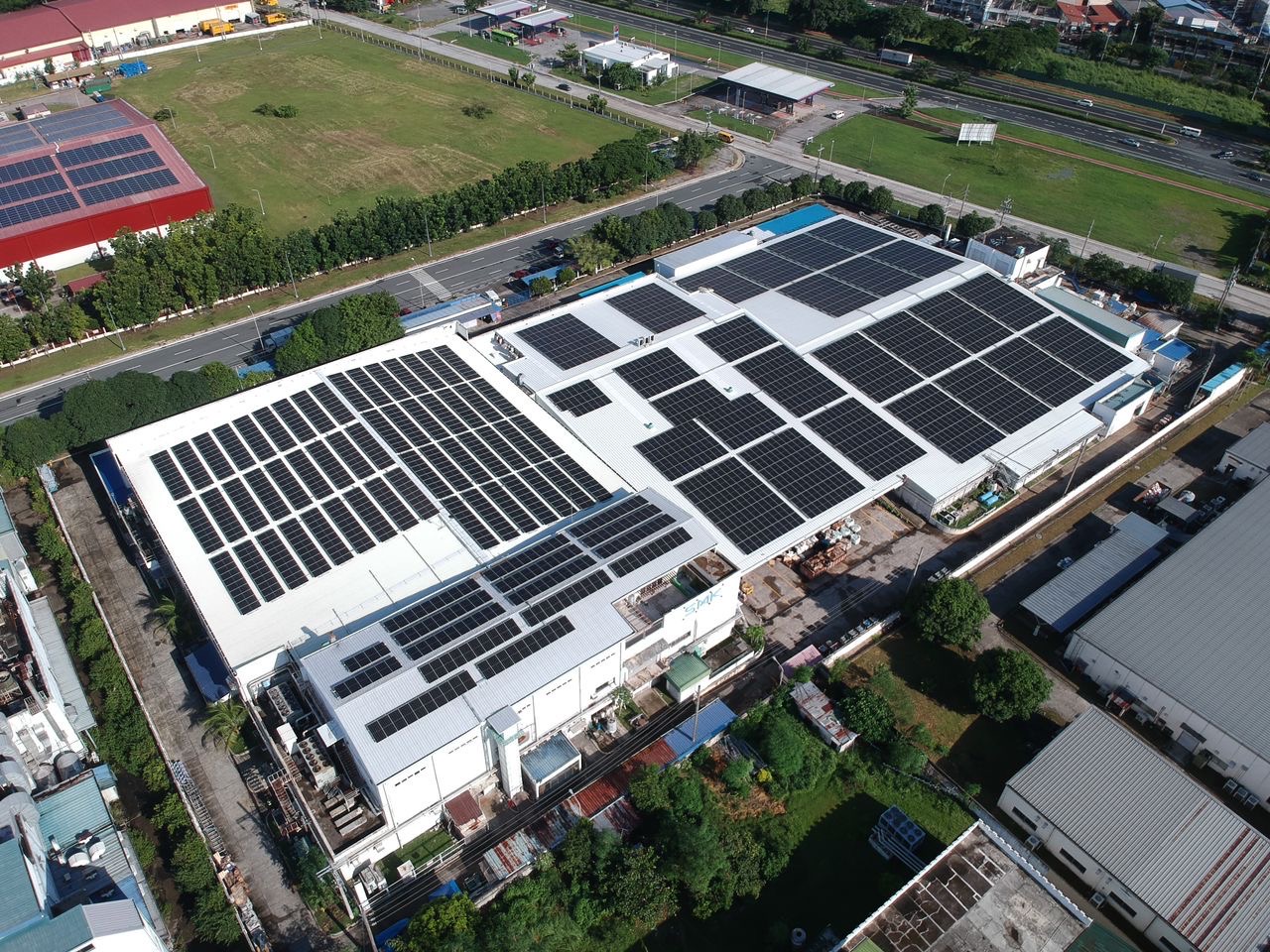
In fiscal 2025, the Philippines plant switched its purchased electricity to renewable energy derived from geothermal power generation.
Combined with electricity generated by on-site solar power systems for self-consumption, the plant achieved zero Scope 2 emissions, following the achievement previously realized by SMK America (San Diego H.Q.).
The installation of solar power generation systems at production sites has been completed at all locations where installation is feasible.
For the remaining sites, we are considering the introduction of renewable electricity as well as the utilization of environmental attributes, such as non-fossil certificates and carbon credits, taking into account local regulations and electricity supply conditions.
Resource Saving Results
Waste discharge
Landfill waste and recycling rate
-
Reporting period: FY2025 (April 1, 2025 – March 31, 2026)
-
Scope of calculations: SMK Corporation (seven sites in Japan) and consolidated subsidiaries (three in Japan and 16 overseas)
SMK Eco Products
Since FY2012, we have established internal criteria for SMK Eco Products.
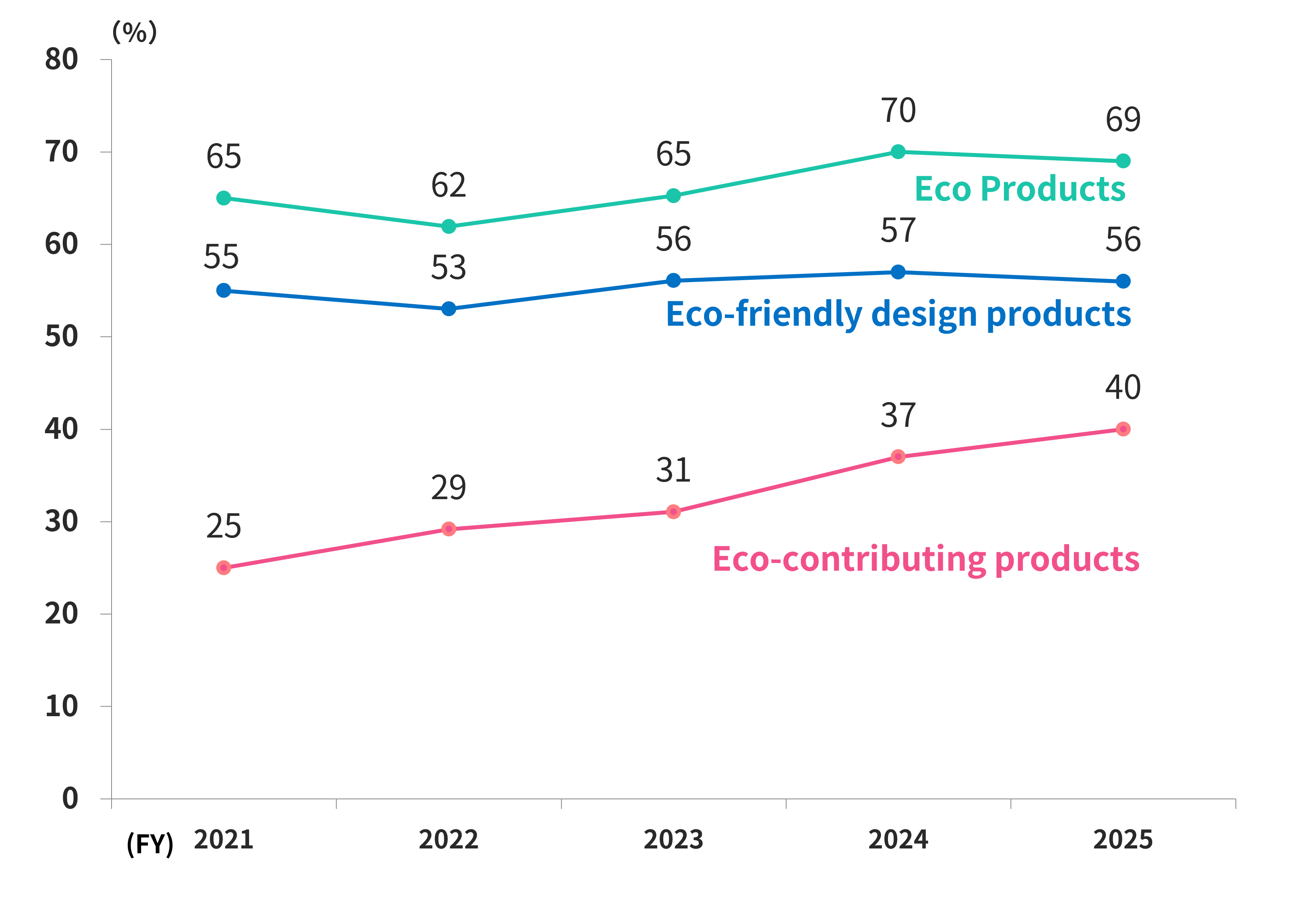
Eco products consist of "Eco-contributing products," which are classified by the end market of customer products, and "Eco-friendly design products," which are evaluated based on the level of environmentally friendly design.
| Deatails | ||
|---|---|---|
| SMK Eco Products | Eco-contributing products | SMK products used in products for environmental markets as defined by internal standards |
| Eco-friendly design products | SMK products that meet internal standards for energy conservation and higher efficiency, resource conservation, environmental protection and eco-friendliness, and reduced load on manufacturing processes | |
Percentage of sales of Eco Products
(If both are applicable, they will be counted unduplicated.)