Comprehensive Guide to Switch Technology with a Focus on Tactile Switches:
Fundamentals, Selection, Quality, and Case Examples
Table of Contents
- What Is a Tactile Switch?
- Types of Switches and Basic Knowledge
- Technical Details of Miniature Push Switches (Tactile Switches)
- Selection Points for Detection Switches, Multi-Way Switches, and Slide Switches (Reference)
- Major Differences Even Within the Same Standard: Variations in Switch Quality by Manufacturer
- SMK’s Development and Quality Assurance System
- Implementation Track Record
- Technical Support System
- FAQ (Frequently Asked Questions About Push Switches)
1. What Is a Tactile Switch?
Tactile switches (miniature push switches) are essential operating components used in a wide range of electronic devices, including remote controls, home appliances, automotive equipment, and industrial equipment. This article focuses on “What is a tactile switch?” and summarizes the technical information that designers and procurement personnel should understand, including the overall “types of switches and how to select them,” “how to evaluate quality,” and “differences among manufacturers.”
Based on SMK’s many years of development experience, the key points for selecting highly reliable switches are explained.
2. Types of Switches and Basic Knowledge
Various types of switches are used in electronic equipment depending on the application and operating method. To first gain an overall understanding, the major switch types and their characteristics are organized below.
In this chapter, representative switch types such as push button switches, tactile switches, detection switches, and toggle switches are introduced, and their main application examples and relationships with applicable markets (industrial equipment and consumer devices) are organized.
In the table below, each switch type is compared based on application suitability, using the following criteria:
✓ :Suitable , △:Partially suitable , - Not applicable
Image | Switch Type | Main Application Examples | Applicable Market | Functions | |||
|---|---|---|---|---|---|---|---|
Industrial equipment | Consumer | Detection | Operation | Setting | |||
 | Push Switches | Start / Stop, reset | ✓ | ✓ | - | ✓ | ✓ |
 | Push Switches (Tactile Switches) | Home Appliances, Remote Controls, Control Panels | ✓ | ✓ | - | ✓ | ✓ |
 | Detection switch | Position detection, door open / close detection | ✓ | ✓ | ✓ | - | - |
 | Toggle / Rocker Switch | Power supply, mode switching | ✓ | ✓ | - | ✓ | ✓ |
 | Multifunctional Operating Device (multi-way Switch) | Signal switching, setting switching | ✓ | △ | - | ✓ | ✓ |
 | Slide switch | Setting switch, compact devices | △ | ✓ | - | ✓ | ✓ |
2.1 Miniature Push Switches (Tactile Switches)
A tactile switch is a miniature push switch designed to be mounted on a printed circuit board (PCB). Its basic specification is momentary operation, in which the switch turns ON (or OFF) only while the button is being pressed and returns to its original state when released.
While this operation falls within the general category of push switches, tactile switches are particularly characterized by their compact size and a clicking feel (tactile feedback) during operation.
In everyday life, tactile switches that produce a “click” sensation or sound when pressed are commonly used.
They are widely adopted for signal input in electronic devices handling small currents, such as remote controls, PC peripherals, digital cameras, handheld game consoles, and control panels in automotive equipment.
Click here for SMK’s Miniature Push Switches (Tactile Switches)
2.2 Detection Switches
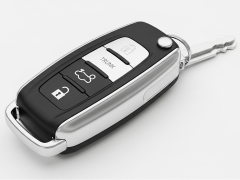
These switches are used to detect the presence or position of an object.
Representative examples include limit switches, micro switches and proximity switches. They are widely used in industrial equipment and automation systems and play an important role in controlling mechanical operations and serving as safety devices. They are suitable for applications requiring high reliability and durability.
Although not usually noticed in daily use, detection switches serve as indispensable “behind-the-scenes” components that ensure equipment continues to operate correctly and safely.
Click here for SMK’s Detection Switches

2.3 Multi-Function Operating Devices (Multi-Way Switches)
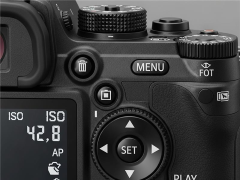
These switches allow operation in multiple directions and support inputs such as up, down, left, right, and diagonal.
They are widely used in game console controllers, industrial robot control panels, and camera operation sections. Because a single switch can provide multiple inputs, they contribute to improved operability and greater flexibility in panel design.
Whereas tactile switches mainly function as devices for single-point or linear operations, multi-way switches can be considered devices that enable intuitive multi-directional operations across a “surface” or within “space.”
Click here for SMK’s Multi-Function Operating Devices (Multi-Way Switches)
2.4 Slide Switches
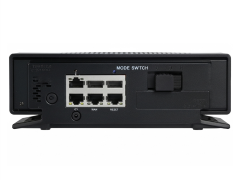
A slide switch performs ON/OFF switching or circuit switching by sliding a lever or knob.
They are suitable for applications where it is desirable to visually confirm “which state the device is currently in,” such as power ON/OFF or operation mode switching. A wide range of variations is available, from compact DIP-type models to types with large current capacity.
Click here for SMK’s Slide Switches
2.5 Other Switches
In addition to the switches described above, various other switches are available depending on the application, such as rotary switches that switch multiple circuits through rotational operation, lever-operated toggle switches, and compact DIP switches used for configuration on circuit boards.
In the next chapter, we will focus on tactile switches and provide a technical overview of these switch types, including their structure, operating principles, electrical characteristics, and reliability.
3. Technical Details of Miniature Push Switches (Tactile Switches)
The performance and reliability of tactile switches are determined by their internal structure and technical specifications. This section explains the basic operating principles and structural features required to gain a deeper understanding of tactile switches and to select them appropriately for specific applications.
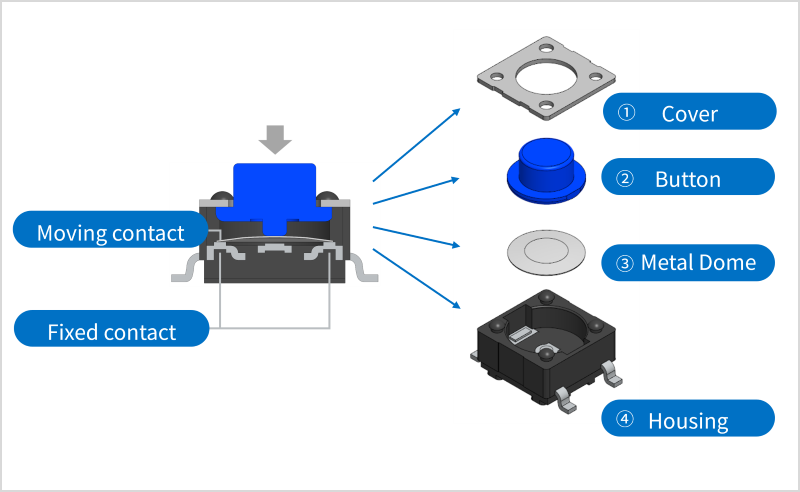
The most distinctive feature of tactile switches is their structure using a metal dome (a thin dome-shaped metal plate).
3.1 Operating Principle and Internal Structure
3.1.1 Operating Principle
When the button is pressed, the metal dome (③) inverts, allowing the contact section on its underside to touch the fixed contact on the housing side, thereby turning the circuit ON.
When the finger is released from the button, the metal dome returns to its original shape and the circuit returns to the OFF state.
3.1.2 Mechanism of the tactile Feedback
The rapid change in load that occurs when the metal dome inverts is transmitted to the fingertip as a “click” sensation (tactile feedback). This click feeling is an important element that provides feedback to the user that the operation has been performed correctly.
Characteristics such as operating force, click strength, and return feeling are determined by the material, thickness, and shape of the metal dome.
3.1.3 Structure and Electrical Characteristics
As shown in the diagram, the structure is simple, making it suitable for miniaturization and contributing to high-density mounting in electronic devices. In addition, because the number of components is small, high reliability can be achieved with proper design. On the other hand, because there is no wiping action at the contacts (a sliding motion that cleans the contact surfaces during contact), the contact material and manufacturing precision become extremely important for ensuring contact reliability.
3.1.4 Sealed Structure and Dust/Water Protection
Many tactile switches adopt or design a sealed structure to prevent the ingress of dust and moisture from the external environment. As a result, many products provide dust-proof and water-resistant performance in accordance with IP (Ingress Protection) standards, enabling use in relatively harsh environments such as outdoor equipment and automotive devices.
3.2 Specifications Related to Usability
The “operating feel” of a tactile switch is determined by a combination of mechanical characteristics, such as operating force (actuation force), travel, and tactile feedback, as well as reliability-related elements, such as contact structure and electrical characteristics.
These factors are directly related to the prevention of operating errors, the reliability of input, and long-term durability, and the optimal values differ depending on the application. The definitions of each specification and the key considerations for selection are summarized in the table below.
Image | Technical Specification | Definition | Importance and Considerations in Selection |
|---|---|---|---|
 | Actuation Force (Operating Force) | The force required to turn the switch ON (unit: N or gf). |
|
 | Travel | The travel distance until the switch turns ON. |
|
 | Tactile Feedback | The tactile feedback during operation. A comprehensive indicator based on the rate of load change around the ON point in the load–displacement curve and the tactile sensation during pressing and release. |
|
 | Contact Structure | Contact material (Ag, Au, etc.) and shape. Stability of contact resistance is particularly important. |
|
 | Electrical Characteristics | Maximum specified values for switch operation such as rated voltage, rated current, contact resistance, and insulation resistance. |
|
3.3 Mounting Types and Selection
There are mainly two methods for mounting tactile switches on printed circuit boards: surface mounting (SMD) and through-hole mounting (THR). Both mounting methods are widely used; however, their suitability varies depending on the application of the equipment, the required reliability, and the conditions of PCB design and production.
At the initial stage of tactile switch selection, this information can be used as basic knowledge to determine which mounting method is appropriate for the design requirements.
Mounting type | SMD | THR | |
|---|---|---|---|
Mounting Diagram | 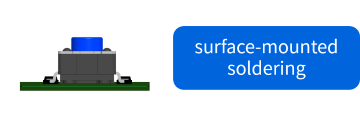 | 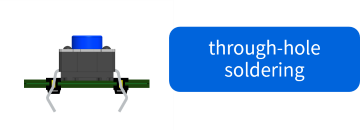 | |
Features/Applications | Mounted by soldering directly onto the land pattern on the PCB surface.
| Mounted by inserting leads into through-holes in the PCB and soldering them on the reverse side. Because secure mechanical fixation is obtained, it is widely used in applications where reliability is critical.
| |
Advantages | Enables miniaturization, high-density mounting, and high-speed assembly using automated mounting machines. | Provides high mechanical strength and is suitable for manual soldering. Mounting position accuracy is relatively easy to control. | |
Disadvantages | Thermal stress during reflow, and mechanical strength (retention force) may be inferior to THR in some cases. | Requires holes in the PCB and is not suitable for high-density mounting. Automatic assembly may be more difficult than with SMD. |
3.4 Selection Points by Application
The required characteristics of tactile switches vary depending on the application.
Here, typical applications such as home appliances, automotive equipment, industrial equipment, and game consoles are introduced, and the key selection points for each are summarized.
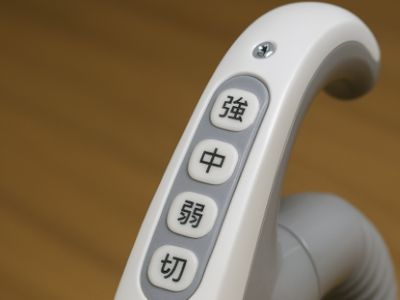
Home appliances
Medium actuation force × medium to short travel
A balance between operability and durability is emphasized, with a moderate click feel and an operating life suitable for long-term use being required. The switch must be easy for a wide range of users to press and minimize input errors.
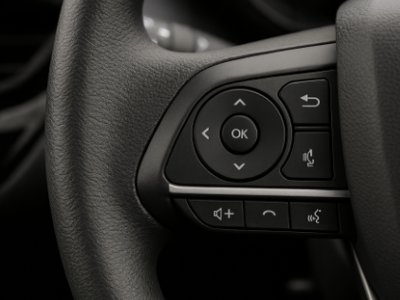
Automotive Equipment
Slightly higher actuation force × medium to long travel × strong click feeling
In high-temperature and vibration environments, reliability is paramount. Stable operation over a temperature range of −40°C to 85°C, along with resistance to vibration and long-term durability, is required. Furthermore, distinct tactile feedback enabling operation without visual confirmation is essential.
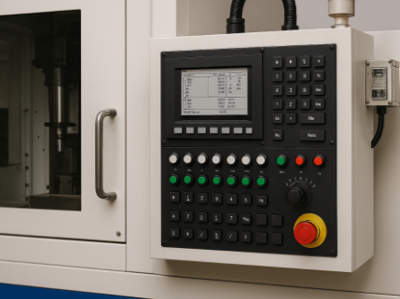
Industrial Equipment
Higher actuation force × clear click feeling × sealed structure.
Long service life and reliable operation are required, with an operating life capable of withstanding use over many years. Reliable operation is required in harsher environments such as when wearing gloves or in the presence of oil and dust.
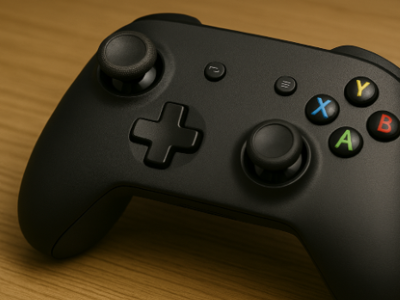
Game Consoles
Slightly lighter actuation force × short to medium travel × moderate click feeling
Comfortable operability and suitability for high-frequency use are important, requiring light actuation force, a short travel, and an exceptionally high-durability operating life. Comfortable operation is the top priority.
We support the selection of tactile switches according to application and environmental conditions.
4. Selection Points for Detection Switches, Multi-Way Switches, and Slide Switches (Reference)
4.1 Selection Points for Detection Switches
Detection switches require high detection accuracy, fast response speed, and environmental resistance capable of withstanding harsh conditions as key technical considerations. When selecting a detection switch, it is necessary to consider the detection target, detection distance, response speed, and installation environment (waterproofing and dust protection).
Click here for SMK’s Detection Switches
4.2 Selection Points for Multi-Way Switches
Achieving both compact size and multi-directional operation is the key technical challenge. Uniformity in operational feel and reliable contact formation in each direction are important.
Click here for SMK’s Multi-Function Operating Devices (Multi-Way Switches)
4.3 Selection Points for Slide Switches
Stable contact resistance, smooth sliding during operation, and long life cycle are required. In particular, dust and moisture protection of the contact section is the key to ensuring reliability.
Click here for SMK’s Slide Switches
5. Major Differences Even Within the Same Standard: Variations in Switch Quality by Manufacturer
Even when switches have the same catalog specifications, such as external dimensions, ratings, and actuation force, significant differences in actual operability and reliability may occur due to differences among manufacturers and their design and manufacturing processes.
Here, using tactile switches as an example, the points where differences in technology and experience among switch manufacturers are likely to appear as quality differences are explained.

5.1 Quality Differences in Operability
Differences in technology and experience, including high-precision molds (micron-level), metal dome force–displacement curve design, accumulation of sensory evaluation data, and feedback into mass production, can expand variation from ±10% to ±20–30%. This may result in “stiff” and “light” switches being mixed within the same lot, leading to increased operational errors and reduced user satisfaction.
5.1.1 Variation in Actuation Force

Variations in manufacturing expertise—such as dome material, thickness selection, fixture rigidity and mounting positional accuracy, as well as the design of peak and return force–displacement curves, along with the workflow from prototyping through sensory evaluation to mass production—affect the reproducibility of click feel. These variations may lead to tactile inconsistencies within a production lot, directly impacting haptic UX evaluation and perceived reliability.
5.1.2 Consistency of Click Feeling

Differences in the maturity of actuator–housing clearance design and in high-precision machining and assembly can introduce variation from the nominal median. For instance, a target median of 0.15 mm may widen to 0.05–0.25 mm in practice, leading to increased detection latency and missed re-presses, ultimately degrading operational efficiency.
5.1.3 Travel Accuracy
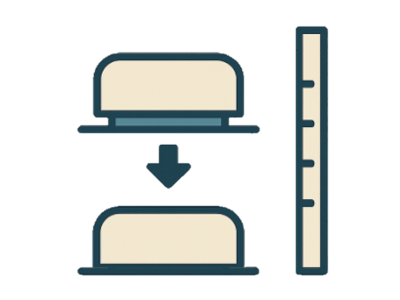
Differences in experience related to guide geometry, surface contact fitting design, mold surface accuracy and parallelism control, and resin shrinkage design increase lateral movement. This causes variations in click feeling during off-center presses and a noticeable lack of stability, ultimately degrading perceived product quality.
5.1.4 Wobble

SMK’s Strength in Operability Quality
At SMK, micron-level mold precision, accumulated sensory evaluation data, and durability testing know-how minimize actuation force variation, click feeling variation, travel accuracy deviation, and wobble, providing a stable operating feel over a long period.
5.2 Quality Differences in Mountability
Differences in mountability directly affect the yield and speed of production lines. Even slight differences in terminal precision can cause feeding failures and soldering defects, resulting in line stoppages and increased costs.
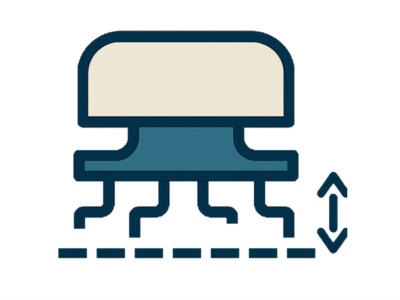
Differences in forming know-how, including of bending and cutting sequences for terminals, springback compensation, and automatic measurement and correction of terminal height, can cause terminal height misalignment at the joint section. This increases the risk of opens and poor fillet formation during soldering, thereby reducing assembly yield.
5.2.1 Coplanarity (Terminal Flatness Accuracy)
Differences in surface treatment experience, including multilayer plating profile control for Ni underlayer and Ag surface plating, process control of surface roughness (Ra) and cleanliness, and ensuring reproducibility between production lines, can degrade wettability. This increases defects such as poor fillet formation, bridging, and opens, thereby increasing rework and inspection effort.
5.2.2 Terminal Plating Quality (Solder Wettability)

Appropriate material selection to ensure dimensional stability above 260°C and consideration of thermal expansion are required. Differences in know-how may cause component deformation or misalignment after reflow, leading to poor tactile performance and reduced yield.
5.2.3 Reflow Heat Resistance

SMK’s Strength in SMT assembly Quality
Leveraging many years of design and evaluation expertise in contact technology, sealing structures, metal domes, and resin materials, SMK provides tactile switches that maintain performance even under harsh environments and long-term use. Reliable electrical conduction is ensured through precision plating technology, while sealing structure design maintains dust-proof and water-resistant performance over long periods. In addition, dome design based on fatigue testing stabilizes click feeling, and material selection resistant to temperature, humidity, and vibration maintains travel accuracy. As a result, an operating life of over 100,000 cycles and high environmental resistance are ensured.
5.3 Quality Differences in Durability
Differences in durability directly affect long-term reliability and product lifetime. Because tactile switches are repeatedly operated components, issues such as contact corrosion, loss of click feeling, and deterioration of waterproof performance can cause failures in harsh environments or after long-term use, ultimately impairing product reliability.
Contact plating management: Differences in precision plating technology that ensure uniform thickness of gold plating or silver plating, and long-standing surface treatment know-how, can lead to increased contact resistance due to corrosion such as oxidation or sulfidation. This degrades switch responsiveness and may eventually result in conduction failure.
5.3.1 Durability of Contact Materials

Management of the sealing structure: Material selection for sealing components requires experience in structural analysis and weather resistance evaluation. Differences in design and validation capability can lead to gaps caused by aging deterioration. As a result, moisture and dust may penetrate, causing loss of click feeling and critical electrical failure due to contact corrosion.
5.3.2 Maintenance of Dust-Proof and Drip-Proof Performance

Material selection and thickness control of the metal dome require fatigue test data and design know-how. Differences in technology can cause elasticity degradation under repeated operation, weakening the click feeling. In the worst case, resulting in complete loss of click feedback and inoperability.
5.3.3 Stability of Operating Life

SMK’s Strength in Durability
Leveraging many years of design and evaluation expertise in contact technology, sealing structures, metal domes, and resin materials, SMK provides tactile switches that maintain performance even under harsh environments and long-term use. Precision plating technology ensures contact reliability, and sealing structure design maintains dust-proof and drip-proof performance over long periods. In addition, dome design based on fatigue testing stabilizes click feeling, and material selection resistant to temperature, humidity, and vibration maintains travel accuracy and waterproof performance. As a result, an operating life of over 100,000 cycles and high environmental resistance are ensured.
For inquiries about introducing switches that achieve excellent click feeling and long-term reliability, please contact us.
6. SMK's Development and Quality Assurance System
Through more than 70 years of switch manufacturing experience, SMK has established technologies to produce high-quality products and a strict quality control system.
6.1 Development and Quality Assurance System
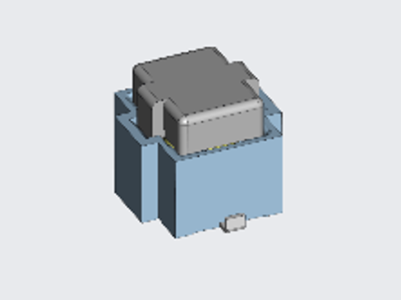
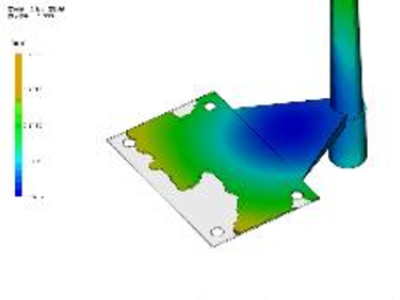
In switch development, it is necessary to simultaneously meet conflicting requirements, such as achieving both miniaturization and operability, as well as high durability and low cost. Engineers specialized in mechanical design, electrical design, materials technology, and mold technology, work together to establish a system that enables design, prototyping, and evaluation to be carried out in a short period.
For example, in the development of ultra-thin tactile switches with a height of 1.5 mm or less, clear click feeling was achieved despite the thin profile by optimizing the shape of the metal dome and selecting appropriate materials. For smartphones applications, dozens of prototype evaluations are repeated to pursue comfortable operability. Improvements reflecting customer feedback are also actively implemented, and specific issues such as mounting defects and customization requests are addressed with flexibility. SMK also participates from the early stages of product development and carries out joint development to provide optimal proposals.
3D Modeling
FEM Analysis
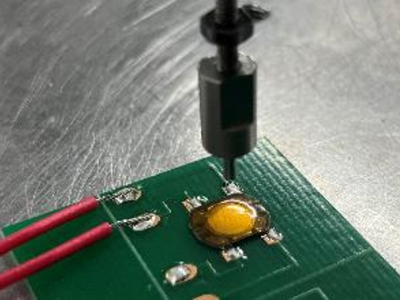
Load measurement
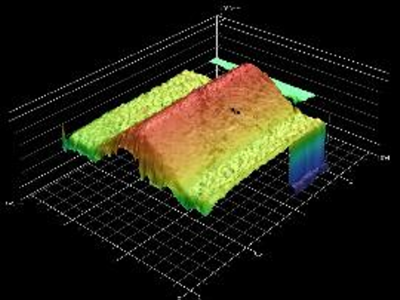
3D Scanning
6.2 Quality Assurance System
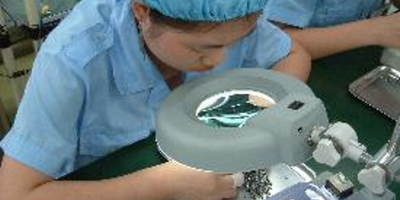
In the manufacturing process, strict control is implemented at each stage, from metal component processing to plastic molding, plating treatment, assembly, inspection, and taping. Defective products are detected at an early stage through in-line inspection, and the stability of the manufacturing process is monitored using statistical process control (SPC).
Quality standards cover a wide range of areas. For example, dimensional inspections ensure accuracy within ±0.1 mm, and electrical inspections confirm contact resistance of 100 mΩ or less. For mechanical characteristics, including actuation force and click feeling, total inspection is performed, and the click feeling is also evaluated through sensory testing by trained inspectors. Durability testing includes continuous operation tests of 1,000,000 cycles, temperature and humidity cycle tests, and vibration and shock tests, as well as other environmental tests that simulate actual operating conditions.
SMK maintains a comprehensive traceability framework that allows manufacturing date, applied materials, and process conditions to be traced by lot number. The company is certified to ISO 9001, complies with IATF 16949 for automotive applications, and meets RoHS requirements.
Quality is continuously improved through automation to minimize human error and PDCA-based process improvement.
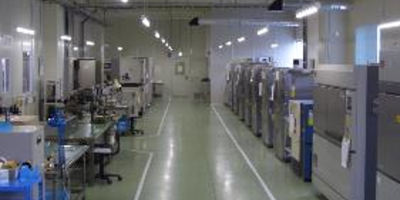
Reliability Testing Center
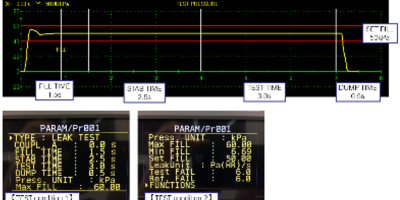
Automated Inspection
Visual Inspection
6.3 Mass Production
SMK’s mass production lines are fully automated and integrated from upstream processes to final assembly. Automated handling across metal processing, resin molding, assembly, and taping minimizes manual work, enabling stable production and consistent quality with small line teams.
A takt time of approximately one second per line has been achieved, and scalable multi-line operation enables flexible high-volume production.
High-speed cameras and image analysis technology are installed at key points within the production lines to monitor component conditions and assembly status in real time through in-line inspection. This enables early detection of shape abnormalities and assembly defects, ensuring process stability and consistent product quality.
Production data is continuously collected and analyzed across all lines, allowing trends in production efficiency and yield rates to be monitored and enabling ongoing process optimization.
By implementing a high-speed, stable automated mass production system, SMK achieves rapid delivery and high throughput, contributing to enhanced cost competitiveness.
7. Implementation Track Record
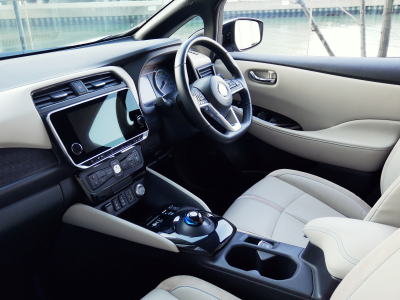
SMK switches are widely adopted by leading global manufacturers in consumer electronics, telecommunications, and automotive markets, with millions of units shipped monthly for telecommunications applications.
Customers value SMK for its consistent product quality, comprehensive technical support, reliable delivery performance, flexible customization capability, and overall cost advantage. Beyond initial component cost, SMK delivers total value by reducing mounting costs, defect-related costs, and long-term reliability risks.
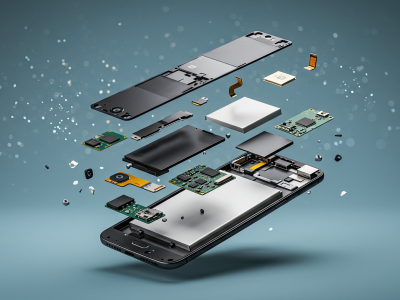
Smartphones / Wearables
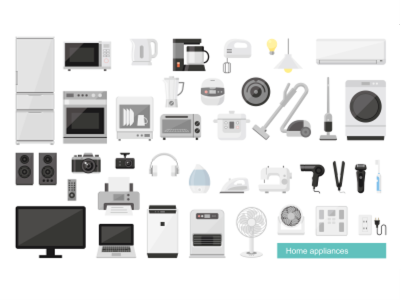
White Appliances
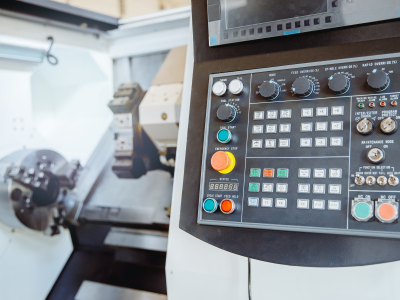
Industrial Equipment
Automotive
8. Technical Support System
SMK provides not only products but also comprehensive technical support from design to mass production and after-sales support.
Technical Consultation from the Design Stage
SMK recommends the most suitable switch types and products based on customer specifications. Environmental conditions, usage frequency, and mounting constraints are evaluated to support specification development, mounting methods, and customization options. Recommended land patterns and PCB layout guidelines are also provided to minimize assembly risks.
Customization support
Flexible support is provided for customer-specific requirements, such as changes to actuation force, terminal shape modifications, dimensional adjustments, and improvements in waterproof performance or heat resistance. Even when standard products cannot meet requirements, optimal products can be developed through dedicated design.
Sample Provision
SMK ensures rapid sample delivery and supports customer evaluations by providing test samples and technical advice throughout the evaluation phase.
Mounting Support
SMK supports implementation by providing recommended land patterns, reflow profile conditions, and assembly troubleshooting. On-site support at customer manufacturing facilities is also available as needed to optimize mounting processes.
Mass Production Support
Customer production is supported through quality assurance systems, stable supply systems, inventory management and traceability support.
After-Sales Support
Rapid response in the event of defects, failure analysis services, and improvement proposals are provided. Information on new products and technical materials is also provided regularly to continuously support customers’ product development.

9. FAQ (Frequently Asked Questions About Push Switches)
Q. What is the difference between a tactile switch and a push switch (push button switch)?
A. A tactile switch is a type of push switch characterized by momentary operation and a click feeling (tactile feedback).
→ For details, see Chapter 1: What Is a Tactile Switch? and Section 2.1: Miniature Push Switches..
Q. Does quality differ by manufacturer even with the same specifications?
A. Yes. Differences appear in actuation force variation, click feeling consistency, travel accuracy, wobble, mounting yield, and durability.
These differences arise from variations in technology and experience, such as mold precision, reaction force curve design, sensory evaluation, surface treatment, sealing design, and mass production reproducibility.
→ For details, see Chapter 5: Quality Differences by Manufacturer.
Q. Does the orientation of a tactile switch matter?
A. In general, for four-terminal types, the terminals located diagonally are electrically connected, so the switch will operate even if rotated 90 degrees.
However, it is recommended to mount the switch in the correct orientation according to the PCB land pattern. Types with LEDs or special structures may have specified orientation requirements.
Q. What is the structure of a tactile switch?
A. The basic structure consists of a case, actuator, metal dome, and terminals. When pressed, the metal dome inverts and closes the contact, and when released, it returns to its original state.
This inversion action produces the click feeling.
→ For details, see Section 3.1: Operating Principle and Internal Structure.
Q. How is a tactile switch used (wiring method)?
A. It is connected in series between the power supply and the load. In microcontroller circuits, pull-up resistors or debounce circuits are used together to stably detect the ON/OFF state.
Q. What is the operating life of a tactile switch?
A. The standard operating life is 100,000 cycles, and in some applications it exceeds 1,000,000 cycles. Retention of the click feeling depends on the metal dome material, thickness, and fatigue design, while long-term electrical conduction depends on the contact plating and sealed structure.
Q. Can it be repaired? Can contact cleaner be used?
A. Replacement is generally recommended. Contact cleaner is not recommended because it may not easily penetrate the sealed structure and may adversely affect resin or sealing materials.
Q. What is a tactile switch cap?
A. It is an operating surface or decorative component attached to the actuator. It improves operability and helps with color identification and design consistency.
Q. What types of tactile switches are available?
A. Variations include SMD and THR types, waterproof (IP-rated) types, ultra-thin types, long-life types, high click feeling types, and high actuation force types.
→ For details, see Section 3.4: Selection Points by Application..
Q. What applications are slide switches used for?
A. Slide switches are suitable for applications where the current state should be visually confirmed, such as power ON/OFF or mode switching. They are widely used in home appliances and industrial equipment and are available in a wide range of types, from compact DIP types to models capable of handling large currents.
Q. What are the characteristics of detection switches?
A. They are switches used to detect the presence or position of objects. They are used in industrial equipment and within devices, such as for detecting the opening and closing of refrigerator doors, and require high durability and accuracy.
Q. In what situations are joystick switches used?
A. They are used in situations that require multi-directional input, such as game consoles and industrial robot control panels. Their characteristic advantage is the ability to achieve both operability and space efficiency.
If you have any questions about switch selection, please contact us.
Product Inquiries
Please feel free to contact us for product information and customization
Click here for glossary, list of discontinued products, and distributor information.
Company Information Inquiries
For inquiries about corporate information, including investor relations and sustainability, please click here.